
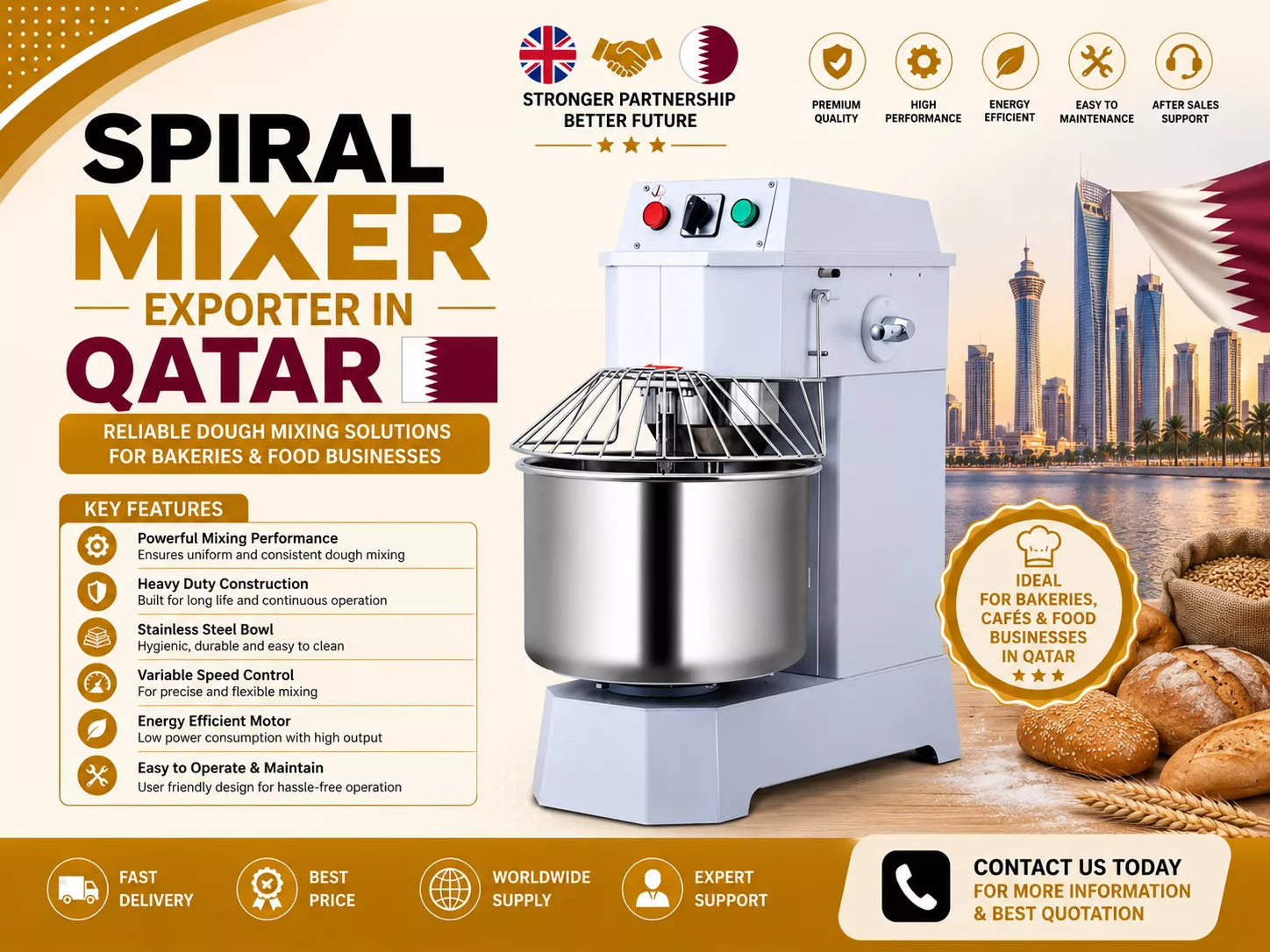
Spiral Mixer Exporter in Qatar
A Complete Guide to Choosing the Right Commercial Dough Mixer
Choosing the right Spiral Mixer Exporter in Qatar is an important decision for bakeries, pizzerias, hotels, restaurants, catering companies, central kitchens, and large-scale food-production facilities. A spiral mixer is not simply a machine for combining flour and water; it is an important part of the dough-production process, where mixing consistency, batch capacity, dough development, machine durability, and operating efficiency can directly influence production.
A professional bakery may prepare hundreds of kilograms of dough during a working day, while a smaller pizzeria may require only a few batches. Because production requirements are different, the right mixer for one business may not be the right choice for another.
When comparing a Spiral Mixer Exporter in Qatar, buyers should therefore look beyond the machine’s bowl size or advertised price. Dough capacity, flour capacity, motor power, mixing speed, bowl configuration, electrical requirements, construction, safety features, installation, maintenance, and spare-parts support all deserve attention.
This guide explains how commercial spiral mixers work, which specifications matter, how to select the appropriate capacity, and what questions a bakery should ask before purchasing.
Spiral Mixer 90 Kg
Spiral Mixer 200 Kg
Spiral Mixer 10 Kg
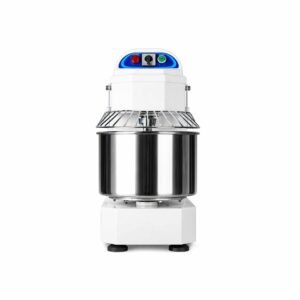
Spiral Mixer 30 Kg
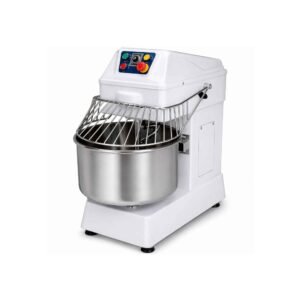
Spiral Mixer 20 Kg
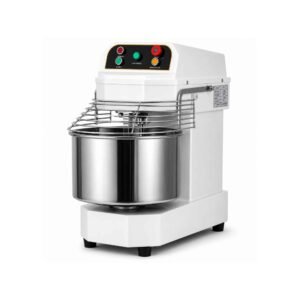
Spiral Mixer 150 Kg
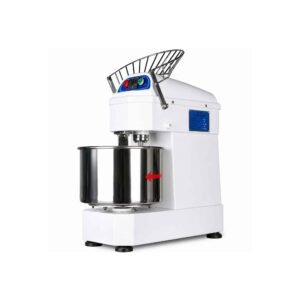
Spiral Mixer 80 Kg
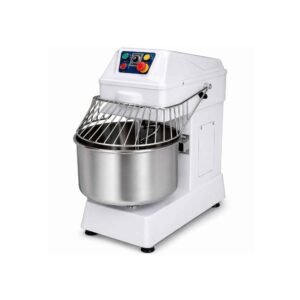
Spiral Mixer 15 Kg
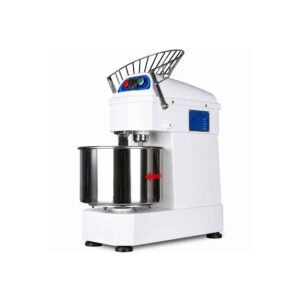
Spiral Mixer 50 Kg
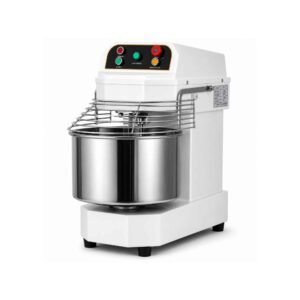
Spiral Mixer 100 Kg
What Is a Spiral Mixer?
A spiral mixer is a commercial dough-mixing machine designed primarily for mixing and kneading yeast-based dough. It generally uses a spiral-shaped mixing arm together with a rotating bowl to combine ingredients and develop the dough.
The spiral mixing action is particularly useful for bread and pizza dough because the machine is designed around dough handling rather than the wider range of applications associated with planetary mixers.
Commercial spiral mixers are available in different bowl sizes and dough capacities. Qatar’s bakery-equipment market includes compact and larger commercial models, with examples ranging from around 20-litre machines to larger industrial systems.
A knowledgeable Spiral Mixer Exporter in Qatar should be able to explain the difference between bowl capacity, flour capacity, and finished-dough capacity before recommending a particular model.
Contact Sri Brothers Enterprises today to discuss your spiral mixer requirement and request a quotation.
Why Do Commercial Bakeries Use Spiral Mixers?
Dough consistency is one of the most important factors in commercial baking. If ingredients are not mixed properly, the resulting dough can vary in texture, elasticity, hydration, and development.
A commercial spiral mixer can help standardize the mixing stage by providing a repeatable mechanical process.
The main benefits can include:
- Consistent mixing and kneading
- Higher batch-handling capability
- Reduced dependence on manual dough preparation
- Repeatable production cycles
- Efficient handling of bread and pizza dough
- Better integration with commercial bakery workflows
- Availability of different capacities for different production levels
However, a mixer should not be selected simply because it has a high advertised capacity. The practical result depends on the recipe, dough hydration, flour characteristics, batch size, mixing time, machine design, and manufacturer’s recommended operating limits.
This is why a reliable Spiral Mixer Exporter in Qatar should ask about the customer’s actual dough-production requirements before suggesting equipment.
How Does a Spiral Dough Mixer Work?
The basic process starts with loading the required ingredients into the mixing bowl. Depending on the recipe, these may include flour, water, yeast, salt, sugar, oil, and other ingredients.
The spiral arm rotates through the mixture while the bowl also rotates on models designed with bowl rotation. The mechanical action combines the ingredients and develops the dough.
During mixing, operators need to consider:
- Ingredient quantity
- Dough hydration
- Flour type
- Batch size
- Mixing speed
- Mixing duration
- Desired dough development
- Dough temperature
These factors can vary significantly from one bakery to another. Consequently, manufacturers’ operating recommendations should be followed instead of assuming that every dough recipe can be processed at the same speed or capacity.
When discussing a machine with a Spiral Mixer Exporter in Qatar, provide details of the dough recipes and batch sizes you actually use. This gives the supplier a better basis for equipment selection.
Bowl Capacity Is Not the Same as Dough Capacity
This is an important point that buyers sometimes overlook.
A mixer may be described using a bowl capacity such as 20 L, 30 L, 40 L, 50 L, 60 L, or more, but that number does not mean the machine can process the same weight of dough.
For example, a Qatar-market listing for a 20-litre commercial spiral mixer specifies a 17 kg dough capacity per cycle, demonstrating why bowl volume and dough capacity should be evaluated separately.
These examples show why a buyer should always ask for the manufacturer’s:
Bowl Capacity + Flour Capacity + Recommended Dough Capacity
rather than relying on only one figure.
How to Choose the Right Spiral Mixer Capacity
Before contacting a Spiral Mixer Exporter in Qatar, calculate your actual production requirement.
Consider:
- Daily dough requirement
- Dough required during peak hours
- Dough weight per batch
- Flour quantity per batch
- Pieces produced from one batch
- Number of batches per shift
- Mixing time
- Loading and unloading time
- Available floor space
- Future production requirements
A basic planning formula is:
Required Batches = Total Required Dough ÷ Practical Dough Capacity per Batch
For example, if a bakery requires 200 kg of dough during a production period and the selected mixer can practically process 40 kg per batch, the bakery would need approximately five mixing cycles.
The actual production plan should also account for mixing time, ingredient loading, dough removal, cleaning, and any recipe-specific requirements.
Small Commercial Spiral Mixers
Smaller spiral mixers can be useful for cafés, restaurants, small bakeries, boutique bakeries, and pizzerias where dough production is moderate.
A compact machine can offer advantages when floor space is limited or when the business does not need to process large batches continuously.
For smaller operations, important considerations include:
- Compact footprint
- Suitable dough capacity
- Electrical requirements
- Ease of cleaning
- Bowl access
- Safety guard
- Mobility, where applicable
- Availability of service and parts
A smaller mixer should still be selected according to the manufacturer’s recommended working capacity rather than being overloaded to meet an occasional production peak.
Medium-Capacity Spiral Mixers
Medium-capacity machines can be appropriate for bakeries and pizzerias with regular commercial production.
These mixers can provide a balance between batch size, production speed, floor space, and investment.
When comparing medium-capacity equipment, the buyer should look at the entire specification rather than assuming that two machines with similar bowl capacities will perform identically.
Motor power, mixing speed, bowl rotation, construction, controls, and maximum recommended dough load can all differ.
A capable Spiral Mixer Exporter in Qatar should provide the exact technical specifications for each proposed model so the bakery can make a meaningful comparison.
Heavy-Duty Spiral Mixers for High-Volume Production
Large bakeries and industrial food-production facilities may need heavy-duty spiral mixers with substantially greater dough-handling capabilities.
For example, HME’s current equipment listing includes bread spiral mixers with 80 kg and 100 kg detachable bowls, as well as other spiral mixers around 75 kg and a range of 20–60 kg equipment.
Industrial manufacturers can also offer substantially larger configurations. A published Univex specification, for example, lists models ranging from 50 kg to 300 kg finished-dough capacity depending on the configuration.
These examples demonstrate the wide range of equipment available. The appropriate model should still be selected according to actual production needs, recipe characteristics, and site requirements.
For a high-volume bakery, the Spiral Mixer Exporter in Qatar should be able to discuss not only the mixer but also how the machine fits into the broader production line.
Spiral Mixer for Bread Production
Bread production often requires repeated dough batches with consistent mixing parameters.
A spiral mixer can be integrated into a workflow such as:
Ingredient Storage → Weighing → Mixing → Dough Dividing → Rounding → Moulding → Proofing → Baking → Cooling → Slicing → Packaging
For bread production, buyers should consider:
- Flour capacity
- Dough capacity
- Mixing speed
- Motor power
- Bowl dimensions
- Spiral-arm construction
- Dough temperature management
- Batch consistency
- Production cycle
- Cleaning requirements
The machine should be capable of handling the bakery’s standard recipes within the manufacturer’s recommended operating range.
Spiral Mixer for Pizza Dough
Pizza businesses have different dough requirements from bread manufacturers. Dough hydration, fermentation method, batch size, and dough-ball weight can all affect mixer selection.
A small pizzeria producing a limited number of pizzas may need a compact mixer, whereas a pizza chain or central kitchen may require a higher-capacity machine.
When selecting a Spiral Mixer Exporter in Qatar, explain how much pizza dough is produced per day and how much dough is prepared in each batch.
The supplier can then help determine whether a particular machine’s capacity and mixing configuration are suitable.
Fixed Bowl vs Removable Bowl Spiral Mixer
Spiral mixers can be available with different bowl configurations.
Fixed Bowl
A fixed-bowl mixer keeps the bowl attached to the machine. This arrangement can be convenient for businesses that prepare dough in repeated batches and have a relatively straightforward workflow.
Removable Bowl
A removable-bowl system can offer greater flexibility in larger production environments. Depending on the equipment design, a bakery may be able to move or exchange bowls as part of its production process.
For large bakeries, detachable-bowl spiral mixers can be particularly useful where production logistics require multiple batches to be managed efficiently. HME, for example, currently lists bread spiral mixers with detachable bowls.
The correct configuration depends on workflow, production volume, space, cleaning procedures, and investment requirements.
Single-Speed vs Two-Speed Spiral Mixer
Mixing speed is another important consideration.
Some commercial mixers use a single mixing speed, while others provide two speeds or variable-speed control. Published Qatar-market equipment includes examples of both single-speed and two-speed spiral mixers.
Two-speed operation can provide greater flexibility for different stages of mixing, but additional speed settings should not automatically be interpreted as better performance.
The right speed profile depends on the recipe, dough type, batch size, and machine design.
A professional Spiral Mixer Exporter in Qatar should explain the available speed configuration and its intended application rather than simply presenting the number of speeds as a marketing feature.
Important Spiral Mixer Specifications to Check
Before ordering, request a complete technical datasheet from the Spiral Mixer Exporter in Qatar.
Dough Capacity
Confirm the manufacturer’s recommended and maximum dough capacity. This is more useful for production planning than bowl volume alone.
Flour Capacity
Check the maximum recommended flour load for your recipes.
Bowl Capacity
Bowl volume gives you an indication of the physical size of the mixing vessel, but it must be considered together with flour and dough capacity.
Motor Power
Motor power should be appropriate for the dough load and intended operating cycle. A heavy dough application can require a more robust machine.
Mixing Speed
Check whether the mixer is single-speed, two-speed, or variable-speed.
Bowl Rotation
The bowl’s movement can work together with the spiral arm to support effective mixing.
Construction
Check the materials used for the bowl, spiral arm, shaft, guard, frame, and other food-contact components.
Safety Guard
A properly designed guard and safety mechanism are important for commercial operation. Some commercial models use an automatic stopping function when the protective cover is opened.
Electrical Requirements
Confirm voltage, phase, frequency, connected power, and installation requirements before ordering.
Dimensions and Weight
Check whether the machine can physically fit into the production area and whether the delivery route can accommodate it.
Controls
Timers, emergency stops, speed controls, and other control features should be evaluated according to the production process.
What Should You Consider About Installation?
Installation planning should begin before the machine arrives.
Measure:
- Production-area floor space
- Door width
- Passage width
- Ceiling height
- Trolley or bowl movement area
- Electrical connection location
- Ventilation requirements
- Operator working space
- Cleaning and maintenance access
The installation requirements should be confirmed with the manufacturer or supplier because electrical specifications and machine dimensions can vary between models.
A professional Spiral Mixer Exporter in Qatar should provide the installation requirements in advance so the customer can prepare the site correctly.
What About Maintenance and Spare Parts?
For commercial bakeries, equipment downtime can affect production schedules. Maintenance planning is therefore part of equipment selection, not an afterthought.
Before purchasing, ask about:
- Warranty coverage
- Preventive maintenance
- Spare-parts availability
- Technical support
- Service response
- Electrical components
- Drive-system components
- Safety components
- Cleaning procedures
The maintenance schedule should follow the manufacturer’s instructions. Operators should also avoid exceeding the recommended dough capacity because repeated overloading can place additional stress on mechanical and electrical components.
How Much Does a Spiral Mixer Cost in Qatar?
There is no single price for all commercial spiral mixers in Qatar.
Cost can vary according to:
- Bowl capacity
- Dough capacity
- Motor power
- Number of speeds
- Bowl configuration
- Automation
- Construction materials
- Manufacturer
- Country of origin
- Installation
- Shipping
- Warranty
- After-sales service
Current Qatar listings illustrate this variation. For example, one 20-litre commercial model is listed at a different price from 40- and 50-litre GECOMA models, while other suppliers list larger industrial equipment on a quotation basis.
Therefore, instead of selecting the lowest-priced machine, provide the Spiral Mixer Exporter in Qatar with your required dough capacity, production volume, application, electrical supply, and installation requirements.
This makes it easier to compare the actual value of each quotation.
How to Evaluate a Spiral Mixer Exporter in Qatar
A supplier should be evaluated on the complete purchasing experience.
Look for:
Technical Knowledge
The supplier should be able to explain dough capacity, flour capacity, motor power, speed, bowl configuration, and operating limitations clearly.
Product Transparency
The quotation should identify the exact model and provide relevant technical specifications.
Application Understanding
The supplier should ask what you are producing and how much dough you need rather than recommending equipment based only on bowl size.
Installation Support
Confirm whether installation, commissioning, and operator guidance are included.
After-Sales Service
Ask about warranty, spare parts, maintenance, and technical support.
Documentation
Request product manuals, specifications, warranty terms, electrical requirements, and other relevant documentation.
Qatar’s commercial bakery-equipment market includes businesses offering spiral mixers alongside ovens, dough sheeters, bread slicers, and other bakery equipment.
This gives buyers the opportunity to compare equipment and supplier support based on their specific requirements.
Common Mistakes When Buying a Spiral Mixer
Even experienced buyers can make mistakes when purchasing commercial machinery.
Choosing by Bowl Size Alone
A large bowl does not automatically mean a large dough capacity. Always check the manufacturer’s recommended flour and dough capacities.
Ignoring Peak Production
Average daily production may hide periods of much higher demand. Calculate your peak production requirement.
Focusing Only on Price
A cheaper machine may not provide the same capacity, construction, controls, warranty, or service support.
Not Checking Electrical Requirements
A machine may be technically suitable but difficult to install if its electrical requirements are not compatible with the facility.
Ignoring Maintenance
Ask about service and spare parts before the purchase, not after a breakdown occurs.
Not Considering Future Growth
If production is expected to increase, compare today’s requirements with realistic future demand before selecting capacity.
Questions to Ask Before Purchasing
Before finalizing a Spiral Mixer Exporter in Qatar, ask the following:
- What dough capacities are available?
- What is the recommended flour capacity?
- What is the bowl capacity?
- Is the bowl fixed or removable?
- How many mixing speeds are available?
- What is the motor power?
- What voltage and phase are required?
- What are the machine dimensions?
- What safety systems are included?
- What materials are used for the bowl and spiral?
- Is installation included?
- Is commissioning available?
- Is operator training provided?
- What is covered by the warranty?
- Are spare parts readily available?
- What maintenance service is available?
- Is the machine suitable for bread dough?
- Is it suitable for pizza dough?
- What is the recommended working capacity?
- What exactly is included in the quotation?
These questions make supplier comparison more transparent and help prevent unexpected costs or technical limitations later.
Frequently Asked Questions
A Spiral Mixer Exporter in Qatar can supply commercial dough mixers for bakeries, pizzerias, restaurants, hotels, catering companies, and food-production facilities. Depending on the business, the supply package may also include delivery, installation, technical assistance, spare parts, and maintenance support.
The correct size depends on dough requirement, batch size, production frequency, recipe characteristics, and peak demand. A bakery should calculate its practical dough requirement before choosing bowl capacity.
No. Bowl capacity refers to the volume of the mixing bowl, while dough capacity refers to the amount of dough the machine is designed to handle. Manufacturer specifications should be checked for both.
Yes. Spiral mixers are widely used for dough-focused applications such as pizza and bread. The appropriate model depends on batch size, dough formulation, hydration, production volume, and required mixing process.
A spiral mixer is specifically designed around dough mixing and kneading, making it a strong choice for bread-focused production. Planetary mixers are more versatile and can handle applications such as creams, batters, and some doughs.
Check dough capacity, flour capacity, bowl size, motor power, speed, bowl configuration, electrical requirements, dimensions, safety features, warranty, spare parts, installation, and after-sales service.
Not necessarily. A larger machine can handle more dough, but efficiency depends on how well its capacity matches the bakery's production schedule. An oversized machine can also require more space and investment than necessary.
Compare suppliers using the same specification checklist. Evaluate the machine, technical documentation, installation, warranty, service, spare-parts support, and total ownership requirements rather than comparing purchase prices alone.
Provide the supplier with your required dough quantity per batch, daily and peak production, type of dough, flour quantity, available electrical supply, preferred bowl configuration, available floor space, and installation location.
Final Thoughts
Selecting a Spiral Mixer Exporter in Qatar should be approached as a production decision rather than simply a machinery purchase. The right mixer needs to match the bakery’s actual dough requirements, production schedule, recipe characteristics, available utilities, floor space, and future growth.
Bowl capacity is useful, but dough capacity and flour capacity are often more important for production planning. Likewise, motor power, mixing speed, bowl configuration, controls, safety features, construction, and maintenance support should be considered before placing an order.
For small bakeries and pizzerias, a compact commercial mixer may provide the required capacity without occupying unnecessary floor space. Medium-sized operations may benefit from a larger batch capacity, while industrial bakeries may require heavy-duty or detachable-bowl equipment designed for higher production volumes.
A trustworthy Spiral Mixer Exporter in Qatar should be transparent about specifications and help the buyer understand what the machine can realistically handle. The best supplier is not necessarily the one offering the lowest initial price; it is the one that can provide suitable equipment, clear documentation, installation support, dependable service, and appropriate long-term technical assistance.
Before making the final decision, compare at least the machine capacity, flour and dough ratings, motor specifications, speed configuration, electrical requirements, dimensions, safety features, warranty, spare-parts availability, and service terms.
By taking this practical approach, bakeries can select a commercial spiral mixer that supports consistent dough preparation and fits efficiently into their overall production workflow.


Add a review
Your email address will not be published. Required fields are marked *