Ice Cream Plant Supplier in UK
A Complete Guide to Commercial Ice Cream Production
Choosing the right Ice Cream Plant Supplier in UK is an important step for businesses planning to manufacture ice cream, gelato, frozen desserts, or related dairy products at commercial scale. Whether you are starting a new ice cream manufacturing business, expanding an existing production facility, or upgrading from small-batch equipment to an industrial production line, the right plant configuration can directly influence production capacity, product consistency, hygiene, operating efficiency, and future scalability.
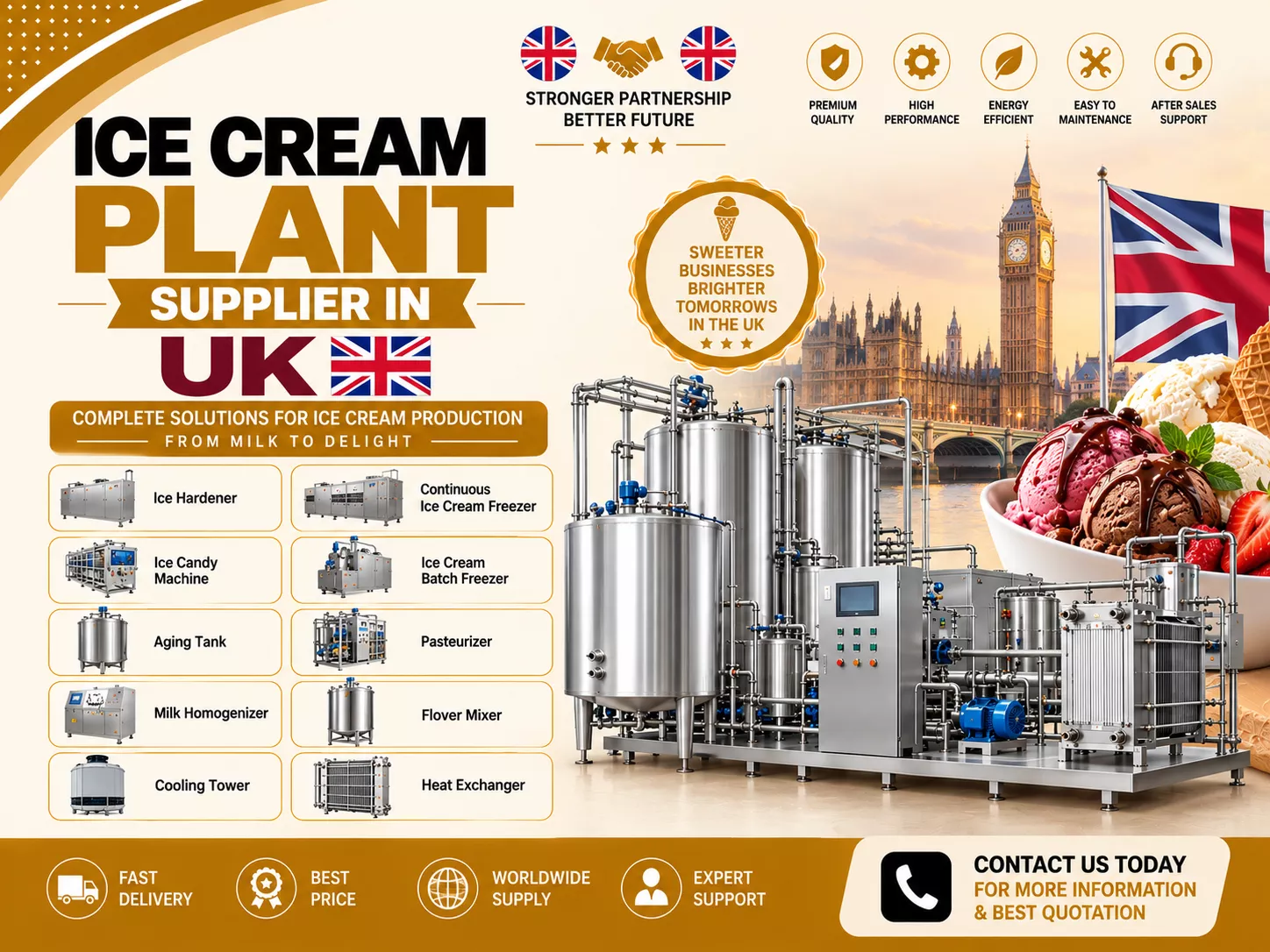
An ice cream plant is much more than a single freezer or ice cream-making machine. A complete production setup can include mixing tanks, pasteurizers, homogenizers, ageing tanks, freezers, filling machines, hardening systems, refrigeration, conveyors, packaging equipment, and cleaning systems.
For this reason, selecting an Ice Cream Plant Supplier in UK should involve a complete understanding of your production requirements rather than simply comparing machine prices.
What Is an Ice Cream Production Plant?
An industrial ice cream production plant is an integrated system of equipment used to transform raw ingredients into finished frozen products.
Depending on the product and production scale, the process may include:
- Ingredient preparation
- Mixing
- Pasteurization
- Homogenization
- Cooling
- Ageing
- Freezing
- Air incorporation
- Flavour and inclusion addition
- Filling
- Extrusion or moulding
- Hardening
- Packaging
- Frozen storage
The exact process depends on whether the business produces bulk ice cream, cups, cones, sticks, sandwiches, tubs, gelato, or other frozen desserts.
Modern industrial suppliers provide complete line solutions covering several of these stages. For example, Tetra Pak’s UK operation describes ice cream line solutions covering freezing, extrusion, filling, wrapping and other production requirements, with systems designed around different product types and production capacities.
A professional Ice Cream Plant Supplier in UK should therefore be capable of looking at the entire production flow rather than recommending isolated machines without considering how they will operate together.
Contact Sri Brothers Enterprises today to discuss your Ice Cream Plant requirement and request a quotation.
How Does an Industrial Ice Cream Plant Work?
A typical commercial ice cream production process can be represented as:
Ingredient Preparation → Mixing → Pasteurization → Homogenization → Cooling → Ageing → Freezing → Filling → Hardening → Packaging → Frozen Storage
Each stage has a specific function.
Ingredient Mixing
Milk, cream, sugar, milk solids, stabilizers, emulsifiers, flavours, and other ingredients are combined according to the product formulation.
The mixing system should provide effective ingredient dispersion while allowing the manufacturer to control the recipe and production batch.
Pasteurization
The prepared mix is heat-treated according to the applicable food-safety and processing requirements.
Pasteurization is an important control point in dairy-based frozen-dessert production.
Homogenization
Homogenization reduces the size of fat globules and helps create a more uniform mix. The selected homogenizer should be matched to the formulation and required production rate.
Cooling and Ageing
After thermal processing, the mix is cooled and may be transferred to ageing tanks before freezing. Ageing allows the mix to develop appropriate physical properties before the freezing stage.
Freezing
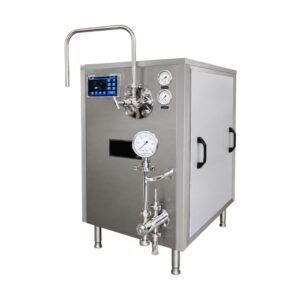
The mix is partially frozen while air is incorporated according to the required product characteristics. Batch freezers are generally suitable for smaller or flexible production, while continuous freezers can be used for higher-volume manufacturing.
Tetra Pak UK, for example, lists a continuous freezer with a capacity range of 150–700 litres per hour, illustrating how industrial freezing equipment can be specified according to throughput.
Filling and Hardening
After freezing, the product can be filled into its packaging or transferred through extrusion or moulding equipment. Hardening then reduces product temperature and helps establish the required frozen structure.
Why Choose a Complete Ice Cream Plant Instead of Individual Machines?
Purchasing individual machines can appear simpler at the beginning, but commercial production requires coordination between different process stages.
Imagine a freezer capable of producing significantly more product than the mix-preparation system can supply. The freezer’s theoretical capacity cannot be fully utilized because the upstream process becomes the bottleneck.
The same issue can occur between:
Freezer → Filler → Hardening System → Packaging
If one section has substantially lower throughput, overall plant productivity may be limited by that section.
An experienced Ice Cream Plant Supplier in UK should therefore evaluate the complete process and identify potential bottlenecks before finalizing the equipment configuration.
What Capacity Ice Cream Plant Do You Need?
Production capacity should be determined before selecting equipment.
Capacity can be expressed as:
- Litres per hour
- Litres per batch
- Kilograms per hour
- Kilograms per batch
- Cups per hour
- Products per minute
- Products per hour
These measurements are not interchangeable.
For example, a mix-preparation unit may be specified in litres per hour, while a freezer may be rated according to mix throughput. A filling machine may instead be rated in containers per minute or hour.
A reliable Ice Cream Plant Supplier in UK should explain exactly what each capacity figure means and under what operating conditions it was measured.
How to Calculate Production Capacity
Suppose a manufacturer wants to produce 4,000 litres of finished ice cream per day.
If the plant operates for eight production hours, the theoretical average requirement would be:
4,000 ÷ 8 = 500 litres per hour
However, designing every machine for exactly 500 litres per hour may not be appropriate.
You also need to consider:
- Cleaning time
- Product changeovers
- Recipe changes
- Maintenance
- Loading and unloading
- Packaging interruptions
- Production peaks
- Process losses
Therefore, the plant should be designed around the real production schedule, not only the mathematical daily average.
This capacity-planning approach helps an Ice Cream Plant Supplier in UK recommend equipment that can meet production requirements without unnecessary oversizing.
Small-Scale Ice Cream Production Plant
Small commercial producers often prioritize flexibility rather than maximum throughput.
A smaller production plant may include:
- Compact pasteurizer
- Mixing system
- Batch freezer
- Small ageing tank
- Filling equipment
- Blast freezer
- Cold storage
This configuration can work well for artisan producers, independent ice cream brands, cafés, restaurants, dessert shops, and businesses developing new products.
UK suppliers such as Edoni manufacture ice cream equipment locally and offer machines designed for smaller professional operations as well as larger requirements. The company states that its equipment is supplied with delivery, installation and operator training, and that it provides maintenance and parts support in the UK and Ireland.
For a smaller business, an Ice Cream Plant Supplier in UK should focus on matching equipment capacity to actual production rather than automatically recommending a large industrial line.
Medium-Capacity Ice Cream Plant
A growing ice cream manufacturer may require a more structured production system.
A medium-scale plant can include:
- Larger mixing tanks
- Batch or continuous pasteurizer
- Homogenizer
- Multiple ageing tanks
- Batch or continuous freezer
- Ingredient dosing
- Filling machine
- Hardening equipment
- Refrigerated storage
This type of plant can provide a balance between production capacity and product flexibility.
Multiple ageing tanks can be particularly useful when the business produces several flavours because different mixes can be processed according to their individual production schedules.
Large Industrial Ice Cream Production Plant
Large-scale manufacturers require a different approach.
An industrial production line may incorporate:
- Automated ingredient dosing
- High-capacity mix preparation
- Continuous pasteurization
- High-pressure homogenization
- Multiple ageing tanks
- Continuous freezing
- Automated air control
- Inclusion and ripple systems
- Automatic filling
- Extrusion or moulding
- Hardening tunnel
- Wrapping
- Cartoning
- Conveyors
- CIP systems
- Centralized PLC controls
- Refrigeration and cold storage
For high-volume production, automation can improve repeatability and reduce unnecessary manual handling.
Tetra Pak UK describes complete ice cream solutions for products such as cups, bulk ice cream, sandwiches and extruded products, with production lines designed around product flexibility and capacity requirements.
Batch Freezer vs Continuous Freezer
The choice of freezer is one of the most important decisions in an ice cream plant.
Batch Freezer
A batch freezer processes a defined quantity of mix at a time.
It is often useful for:
- Artisan production
- Small and medium businesses
- Multiple flavour production
- Specialty products
- Recipe development
Batch systems can provide flexibility when production changes frequently.
Continuous Freezer
A continuous freezer is designed to process mix continuously.
It can be advantageous for:
- High production volumes
- Large-scale manufacturing
- Consistent output
- Automated production
- Integration with filling and packaging lines
Tetra Pak’s S700 A2 continuous freezer, for example, is specified for 150–700 litres/hour and is designed for continuous freezing, mixing, whipping and air incorporation.
The correct choice depends on the production volume and product requirements. A knowledgeable Ice Cream Plant Supplier in UK should evaluate these factors before recommending the freezer.
Important Ice Cream Plant Equipment
Mixing Tanks
Mixing tanks are used to combine ingredients and prepare the base mix. Jacketed tanks can allow controlled heating or cooling where required.
Pasteurizer
The pasteurizer provides controlled thermal processing of the mix.
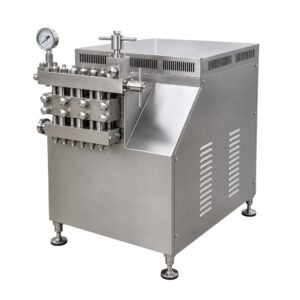
Homogenizer
The homogenizer helps create a more uniform emulsion by reducing fat-globule size.
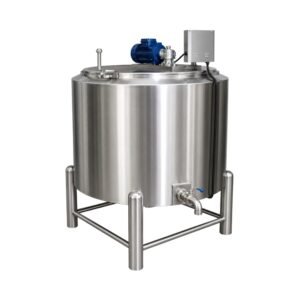
Ageing Tanks
Ageing tanks hold the prepared mix under controlled conditions before freezing.
Batch or Continuous Freezer
The freezer creates the required frozen structure and incorporates air according to the product specification.
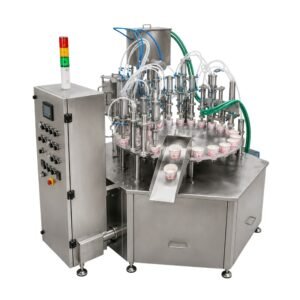
Filling Machine
Filling equipment transfers the product into cups, tubs, cones, or other packaging formats.
Hardening Tunnel
A hardening tunnel rapidly reduces product temperature after filling or forming.
Packaging Equipment
Packaging can include wrapping, sealing, labelling, cartoning, and other downstream operations.
Refrigeration System
Reliable refrigeration is essential for maintaining frozen products during processing, hardening and storage.
CIP System
Clean-in-place systems can automate cleaning procedures for compatible processing equipment and pipework.
What Technical Specifications Should You Check?
Before buying from an Ice Cream Plant Supplier in UK, request detailed technical documentation.
Important specifications can include:
Production Capacity:
Confirm the actual throughput of every major machine.
Batch Capacity:
For batch equipment, verify the usable batch quantity rather than only total vessel volume.
Temperature Range:
Check the required heating, cooling and freezing temperature ranges.
Homogenization Pressure:
Confirm the operating pressure and flow rate where applicable.
Mixing System:
Check agitator type, mixing speed and tank configuration.
Freezer Capacity:
Verify throughput and product-specific performance requirements.
Filling Capacity:
Check containers per minute or hour according to your packaging format.
Automation:
Determine whether controls are manual, semi-automatic or fully automated.
Electrical Requirements:
Confirm voltage, phase, frequency and connected load.
Utilities:
Check requirements for water, chilled water, steam, compressed air, refrigeration and drainage.
Machine Dimensions:
Make sure the equipment fits the planned production area.
Construction Material:
Verify food-contact materials and hygienic construction.
Cleaning System:
Determine whether equipment is compatible with manual cleaning or CIP.
Hygiene and Food Safety
Hygiene should be considered during the initial plant design.
Food-contact equipment should be designed for effective cleaning and sanitation, while product-contact pipework should be appropriately configured for the process.
Important considerations include:
- Hygienic equipment design
- Food-grade materials
- Smooth product-contact surfaces
- Appropriate weld construction
- Drainability
- Cleaning accessibility
- CIP compatibility
- Proper sanitation procedures
UK food businesses must operate within applicable food-hygiene and food-safety requirements. The equipment supplier can provide technical information, but the food business remains responsible for operating the facility in compliance with the requirements applicable to its operation.
A responsible Ice Cream Plant Supplier in UK should therefore discuss hygiene requirements as part of the equipment-selection process rather than treating them as an afterthought.
Automation and Production Control
Automation can improve consistency and production monitoring.
Depending on the plant, automated controls can manage:
- Ingredient dosing
- Mixing
- Temperature
- Pasteurization
- Homogenization
- Ageing
- Freezing
- Filling
- Conveyor movement
- Cleaning cycles
- Alarms
- Production records
However, automation should be selected according to the business’s actual requirements.
A small artisan manufacturer may benefit from semi-automatic equipment that offers greater recipe flexibility, whereas a high-volume industrial plant may require centralized controls and automated production sequencing.
An experienced Ice Cream Plant Supplier in UK should be able to explain the practical benefits of each automation level.
Plant Layout and Workflow
Equipment placement can significantly affect production efficiency.
A logical layout can follow:
Raw Material Area → Mixing → Pasteurization → Homogenization → Ageing → Freezing → Filling → Hardening → Packaging → Cold Storage
The layout should also consider:
- Personnel movement
- Raw-material movement
- Finished-product movement
- Cleaning access
- Maintenance access
- Drainage
- Utilities
- Refrigeration
- Emergency access
- Future expansion
For a large industrial project, process-flow planning should take place before the final equipment order.
Refrigeration and Cold Storage
Ice cream production depends heavily on refrigeration.
The refrigeration system may support:
- Mix cooling
- Ageing tanks
- Freezing
- Hardening
- Cold rooms
- Frozen-product storage
The required refrigeration load depends on production volume, product characteristics, ambient conditions, equipment design, storage requirements and operating schedule.
For this reason, refrigeration should be considered as part of the overall plant design.
Maintenance and After-Sales Support
Commercial production equipment needs ongoing maintenance.
Before choosing an Ice Cream Plant Supplier in UK, ask about:
- Installation
- Commissioning
- Operator training
- Preventive maintenance
- Spare parts
- Emergency service
- Technical support
- Warranty
- Remote assistance
- Equipment refurbishment where applicable
For example, UK-based ice cream equipment companies such as Carpigiani UK describe delivery, installation, operator training, spare-parts provision and pre- and post-sales support as part of their service offering.
Other UK suppliers also provide maintenance and servicing for ice cream production equipment. Grants Refrigeration, for example, states that it supplies and refurbishes equipment for the ice cream manufacturing industry and provides repair and refurbishment services.
These examples demonstrate why after-sales capability should be considered alongside the machine itself.
How Much Does an Ice Cream Plant Cost in the UK?
There is no universal price for an industrial ice cream plant.
The investment depends on the complete project configuration, including:
- Production capacity
- Batch or continuous processing
- Number of tanks
- Pasteurization system
- Homogenizer
- Freezer
- Filling machine
- Hardening tunnel
- Packaging machinery
- Refrigeration
- CIP system
- Automation
- Installation
- Building modifications
- Utilities
- Cold storage
A small batch-production setup and a fully automated industrial ice cream line are fundamentally different projects.
Therefore, when contacting an Ice Cream Plant Supplier in UK, provide your expected production volume and product requirements before requesting a quotation.
A detailed project specification allows suppliers to provide a more meaningful proposal and makes supplier-to-supplier comparison easier.
How to Select the Right Ice Cream Plant Supplier in UK
The supplier should be evaluated on more than product availability.
Experience
Look for a supplier with practical experience in ice cream or food-processing equipment and an understanding of commercial production environments.
Technical Expertise
The supplier should be able to explain process flow, capacity, equipment compatibility, utilities, installation and maintenance.
Authority
Technical documentation, manufacturer information, identifiable equipment specifications and relevant project experience can help establish credibility.
Trust
A trustworthy supplier should provide realistic capacity figures, clear commercial terms, warranty details, service information and transparent limitations.
This E-E-A-T approach is particularly important when purchasing a complete production plant because the equipment represents a long-term business investment.
Common Mistakes When Buying an Ice Cream Plant
Selecting Equipment Only by Price
A low initial price does not necessarily mean a lower total cost of ownership.
Buying Based Only on Maximum Capacity
Theoretical machine capacity should be compared with the actual production workflow.
Ignoring Product Variety
Different products may require different freezing, filling, inclusion and packaging arrangements.
Forgetting Utilities
Power, refrigeration, water, steam, compressed air and drainage can significantly influence installation requirements.
Not Planning Future Expansion
A plant should ideally have a realistic expansion strategy if production is expected to grow.
Ignoring Maintenance
Spare parts and technical support can have a major effect on long-term equipment availability.
Treating Every Machine as Independent
The production line should be balanced from ingredient preparation through finished-product storage.
Questions to Ask Before Ordering
Before finalizing an Ice Cream Plant Supplier in UK, ask:
- What production capacity is recommended?
- What is the hourly and daily output?
- What products can the proposed line manufacture?
- What is the batch size?
- What type of pasteurizer is included?
- Is homogenization included?
- How many ageing tanks are required?
- Should we use a batch or continuous freezer?
- What filling formats are supported?
- What hardening system is recommended?
- What refrigeration capacity is required?
- What utilities are needed?
- What level of automation is included?
- What is the complete plant footprint?
- Is installation included?
- Is commissioning included?
- Is operator training available?
- What spare parts are normally required?
- What warranty is provided?
- What after-sales support is available?
Frequently Asked Questions
An Ice Cream Plant Supplier in UK provides equipment, systems, or complete processing solutions for commercial and industrial ice cream production. Depending on the supplier, the service may include equipment selection, plant integration, installation, commissioning, training, maintenance and technical support.
A complete plant can include mixing tanks, pasteurizers, homogenizers, ageing tanks, freezers, filling machines, hardening systems, conveyors, packaging equipment, refrigeration, cold storage and cleaning systems.
A batch system processes a defined quantity at a time and can provide flexibility for smaller or varied production. A continuous system is designed for ongoing production and is generally more appropriate for higher-volume manufacturing.
Start with your required daily and peak production. Then calculate the required capacity across mix preparation, pasteurization, homogenization, ageing, freezing, filling and hardening. The complete line should be balanced so that one process does not unnecessarily restrict another.
Yes. A properly planned plant can support multiple flavours, but production scheduling, ageing tanks, ingredient dosing, cleaning and product changeovers should be considered during plant design.
Homogenization is commonly used in many commercial ice cream formulations to improve emulsion uniformity and influence product texture and stability. The exact homogenization requirement depends on the formulation and process.
For high-volume continuous production, a continuous freezer may be appropriate. For smaller or highly varied production, a batch freezer may offer greater flexibility. The correct choice depends on product type, output and the rest of the production line.
The cost varies considerably depending on capacity, automation, freezer type, filling format, refrigeration, hardening, packaging, utilities, installation and other project requirements. A customized quotation is more useful than a generic price.
Look for technical expertise, relevant industry experience, clear specifications, realistic capacity information, installation support, spare-parts availability, warranty coverage and dependable after-sales service.
Yes, expansion can be considered during the initial design. Available space, utilities, control systems, refrigeration and equipment layout should be planned with future capacity in mind.
Final Conclusion
Selecting the right Ice Cream Plant Supplier in UK requires a complete understanding of the production process, not just individual machine specifications. A successful plant should connect ingredient preparation, mixing, pasteurization, homogenization, cooling, ageing, freezing, filling, hardening, packaging and frozen storage into a coordinated production workflow.
The ideal configuration depends on your product range, daily production, peak output, batch size, packaging format, automation requirements, available space and utility infrastructure.
For artisan and smaller commercial producers, batch-oriented equipment can provide flexibility and control. Medium-scale manufacturers may require a combination of larger processing vessels, ageing tanks and automated filling. High-volume industrial manufacturers may benefit from continuous processing, automated freezing, extrusion, filling, hardening and packaging systems.
When evaluating an Ice Cream Plant Supplier in UK, buyers should compare more than the purchase price. Technical expertise, process integration, equipment documentation, installation, commissioning, training, spare parts, warranty and long-term technical support are all important parts of the purchasing decision.
The best supplier is not necessarily the one offering the largest machine or the lowest quotation. It is the supplier capable of understanding the complete production requirement and recommending an appropriately sized, hygienic, efficient and scalable solution.
For businesses planning a new ice cream manufacturing facility in the UK, the most reliable approach is to define the product, calculate the required capacity, map the complete process, determine the utilities and layout, and then select the equipment and supplier.
With proper planning and correctly matched equipment, a commercial ice cream plant can provide a strong foundation for consistent production, efficient operations and future business growth.



Add a review
Your email address will not be published. Required fields are marked *