
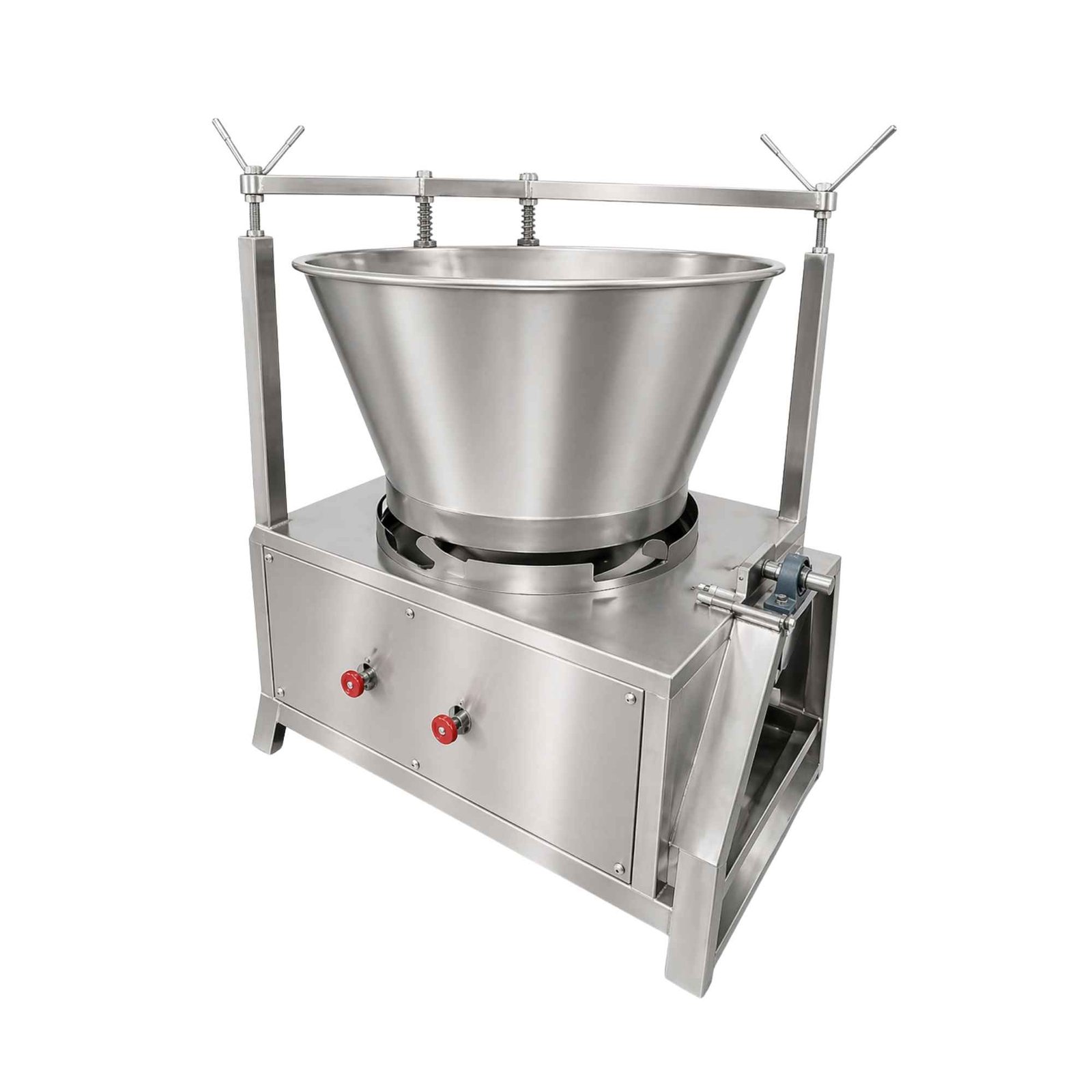
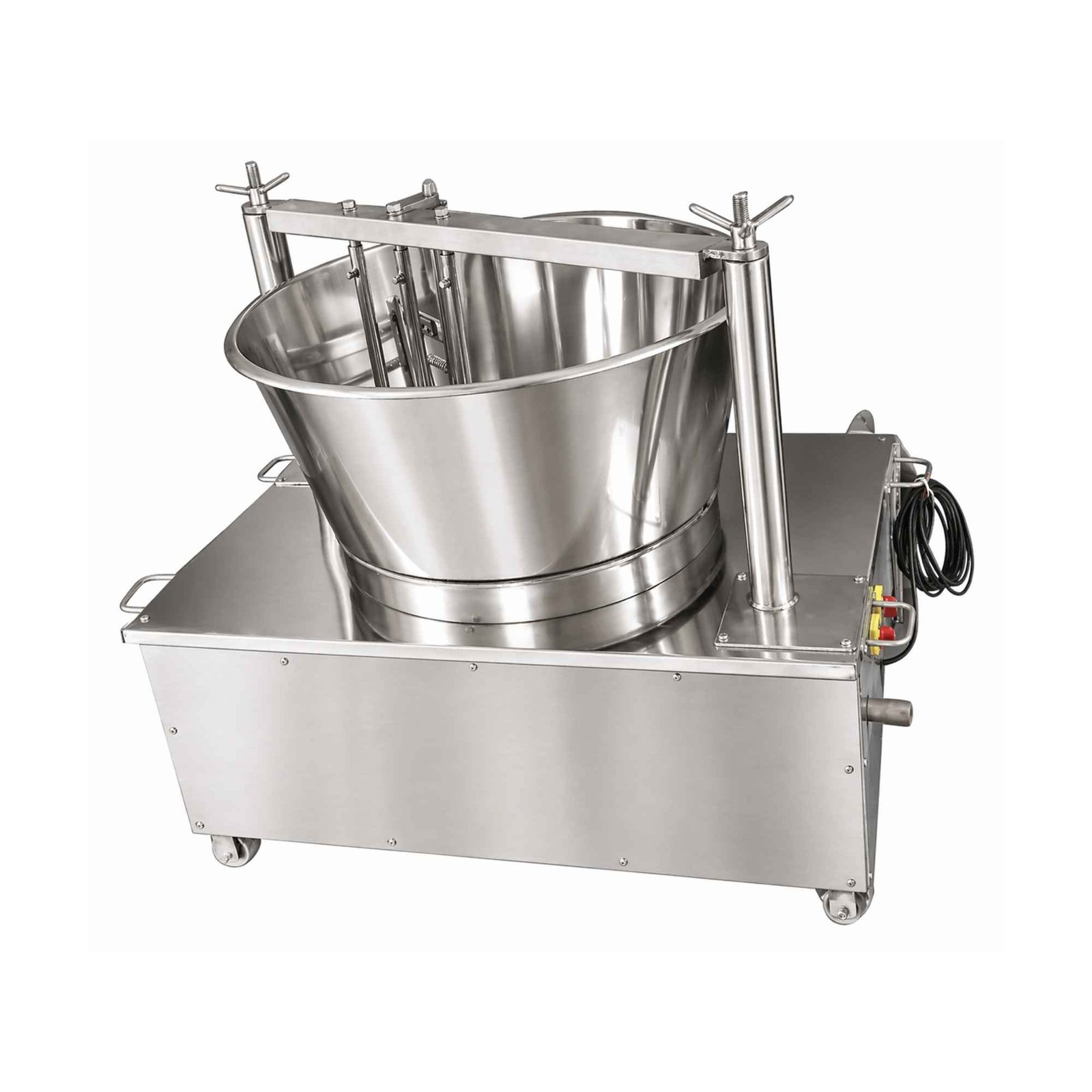

Description
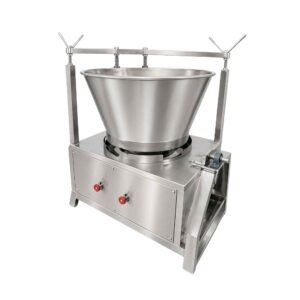
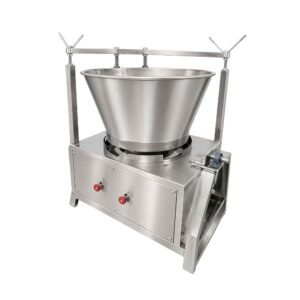
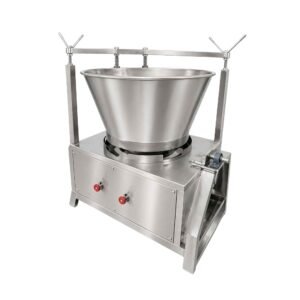
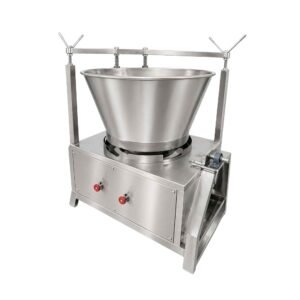
The 500 Ltr Khoya Making Machine is designed for large sweet factories, dairy plants and commercial food-processing businesses that need to prepare khoya in very large batches.
With a 500-litre capacity, this machine is suitable for businesses that process a high quantity of milk every day and need a bigger production setup than standard commercial khoya machines.
The machine helps convert milk into thick khoya or khoa, which can later be used in many Indian sweets.
A High-Capacity Machine for Large Khoya Production
Small and medium machines may work well for limited production. But large factories often need more milk to be processed in each cycle.
A 500 Litre Khoya Making Machine can be useful when:
- Daily milk processing is very high
- Large khoya batches are required
- Smaller machines need too many production cycles
- Sweet production runs at a large scale
- Multiple outlets need regular supply
- Bulk khoya orders are common
- The business is expanding production
The 500-litre capacity is mainly meant for businesses with strong commercial demand.
What Is a 500 Ltr Khoya Making Machine?
A 500 Ltr Khoya Making Machine is commercial milk-processing equipment used to prepare khoya from milk in a large batch.
Its basic job is simple:
Milk is heated → moisture reduces → milk becomes thick → khoya is prepared.
The machine mainly handles the milk-to-khoya stage of production.
Other sweet-making steps are completed separately depending on the product being manufactured.
How Does the Machine Work?
The working process can be understood in a few simple stages.
Milk Loading
Milk is added to the processing vessel.
Heating
The milk is heated according to the machine setup.
Moisture Removal
As heating continues, water content slowly reduces.
Thickening
The milk becomes thicker as more moisture is removed.
Khoya Formation
Processing continues until the required khoya consistency is reached.
Product Collection
The finished khoya is removed for further use.
A simple production flow is:
Milk → Heating → Moisture Reduction → Thickening → Khoya → Collection
The exact working method depends on the selected machine configuration.
Who Needs a 500 Litre Khoya Machine?
The Commercial 500 Litre Khoya Making Machine is mainly suitable for large production units.
It may be used by:
- Large mithai factories
- Dairy processing plants
- Bulk khoya manufacturers
- Central sweet kitchens
- Food-processing factories
- Sweet production plants
- Large catering units
- Milk sweet manufacturers
A business should select this capacity only when its daily production requirement supports such a large batch size.
Why Large Factories Choose 500 Litre Capacity
When production increases, running many small batches can slow down the workflow.
A 500L Khoya Making Machine gives manufacturers a larger batch option.
This may help with:
- Processing more milk in one cycle
- Reducing repeated small batches
- Supporting bulk sweet production
- Handling larger daily demand
- Planning factory production more easily
- Preparing khoya for several sweet products
- Supporting future business growth
Is 500 Litres the Final Khoya Output?
No.
The 500-litre figure refers to the machine capacity, not the final quantity of khoya.
Milk contains a large amount of water. During khoya production, much of this moisture is removed.
Final khoya output can depend on:
- Milk type
- Fat percentage
- Milk solids
- Moisture reduction
- Required khoya texture
- Processing conditions
So, buyers should not treat 500 litres of machine capacity as 500 litres of finished khoya.
400 Litre vs 500 Litre Khoya Making Machine
FAQs
The price of a 500 Ltr Khoya Making Machine depends on the heating system, stainless-steel grade, automation level, agitator design, motor specifications, control panel and customization. Buyers should compare machines on actual working capacity and specifications rather than price alone.
The actual milk processing capacity depends on the usable working volume of the vessel. A 500-litre vessel should not automatically be assumed to process a full 500 litres of milk for every product. The manufacturer should specify vessel volume and recommended working capacity separately.
Khoya output from 500 litres of milk varies according to the milk's fat percentage, total solids, cow or buffalo milk, heating process and the moisture required in the finished khoya. For accurate production planning, buyers should request a trial using their own type of milk.
Steam heating is commonly considered for large commercial production, while gas, LPG or other heating arrangements may suit businesses with different utility availability. The best option depends on daily production volume, fuel cost, available infrastructure and desired temperature control.
Gas-fired configurations may be available depending on the machine design. Before purchasing, buyers should confirm burner capacity, approximate gas consumption, safety provisions and whether the heating system can handle the required milk volume efficiently.
A semi-automatic machine normally requires more operator involvement during heating, monitoring and discharge. An automatic machine can provide greater process control and reduce manual intervention through features such as controlled stirring, temperature monitoring and automated operating functions.
Electricity consumption depends on the agitator motor, control system, pumps, blowers and whether electricity is also being used as the heating source. Buyers should ask for the total connected load in HP or kW before finalizing the machine.
SS 304 is widely used for food-contact equipment because of its corrosion resistance, hygiene and cleanability. Buyers should confirm which parts of the machine are SS 304, particularly the vessel, product-contact area, agitator and discharge components.

There are no reviews yet.