

Description
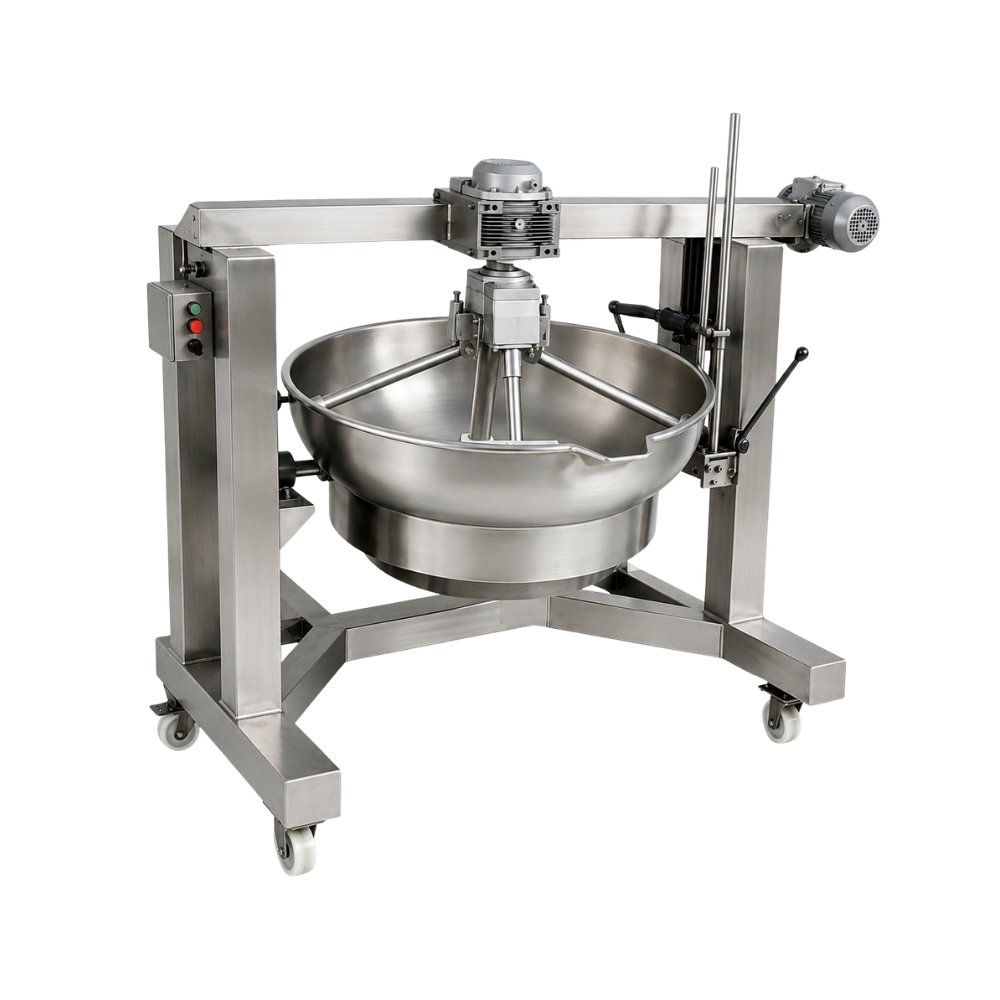
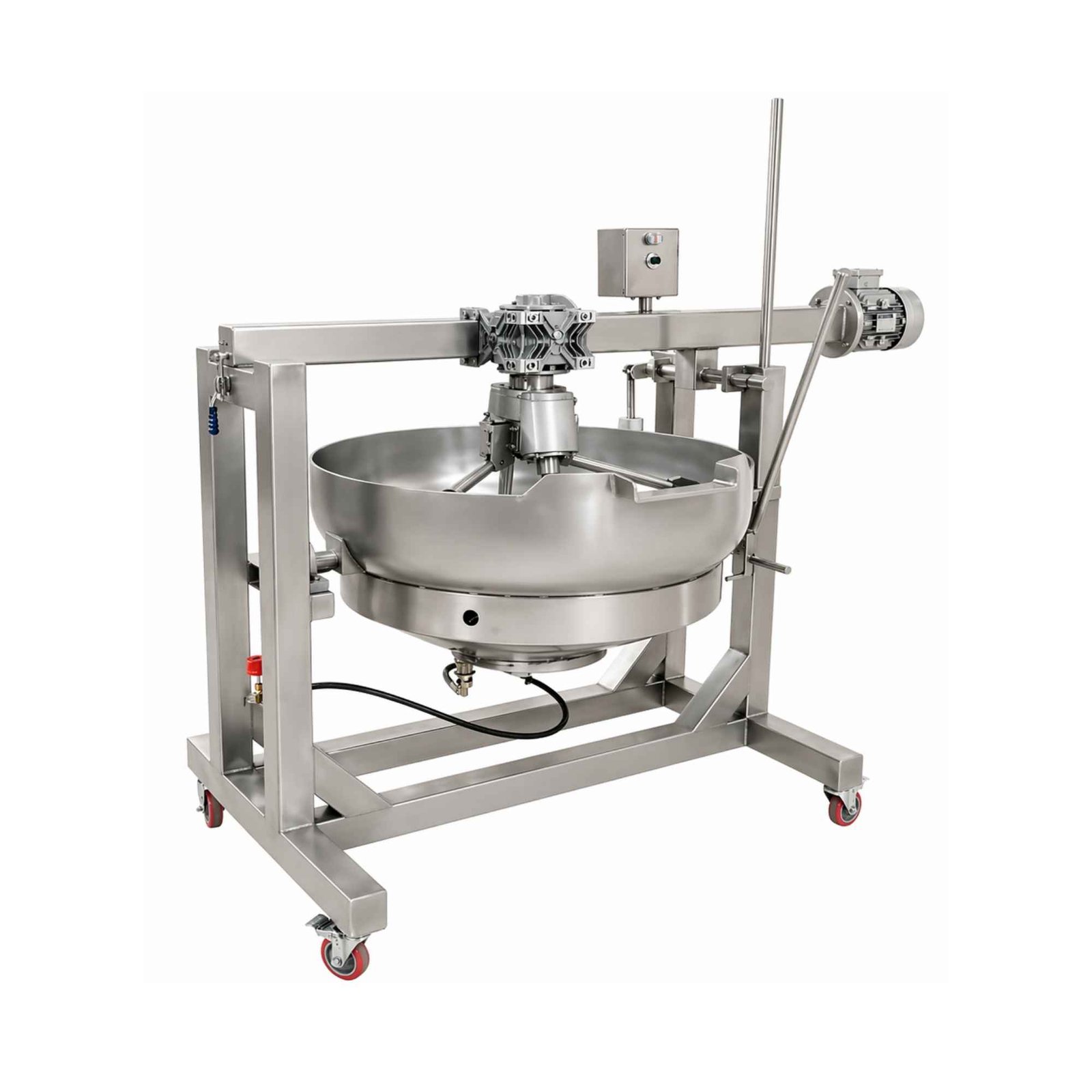
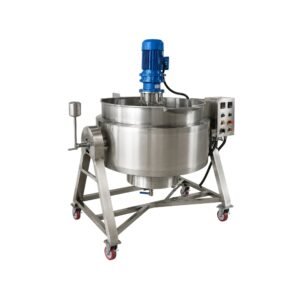
The Halwa Making Machine is designed for efficient mixing and preparation of halwa and similar thick food products in commercial food processing environments. Its stainless-steel processing vessel, mechanical agitator, geared drive system, and sturdy supporting frame provide a practical setup for controlled batch processing.
The machine features a large open vessel with a centrally mounted mechanical stirring assembly that continuously mixes the product during processing. The heavy-duty frame supports the vessel and drive arrangement, while the visible tilting mechanism can assist with convenient product discharge after processing.
Its stainless-steel construction also provides a smooth and hygienic surface suitable for food-processing applications.
For sweet manufacturers, halwa producers, commercial kitchens, catering operations, and food-processing businesses, this machine can help reduce manual stirring work and provide a more organized method of preparing halwa in batches.
Key Features of Halwa Making Machine
• Stainless-steel processing vessel
• Heavy-duty supporting frame
• Mechanical agitator for continuous mixing
• Geared drive arrangement
• Centrally mounted stirring mechanism
• Large open mixing vessel
• Convenient vessel handling arrangement
• Side-mounted operator controls
• Tilting arrangement for product discharge
• Mobile frame with caster wheels
• Smooth food-contact surfaces
• Suitable for commercial food-processing applications
• Designed for batch-based processing
• Robust construction for regular industrial use
What Is a Halwa Making Machine?
A Halwa Making Machine is a food-processing machine designed to assist in the mixing and preparation of halwa and other similar thick food preparations. Instead of depending entirely on manual stirring, the machine uses a powered mechanical agitator to keep the product moving inside the processing vessel.
The machine consists of a large stainless-steel vessel, overhead drive system, central stirring arrangement, supporting frame, side-mounted controls, and a vessel handling mechanism. This configuration provides a practical setup for commercial halwa preparation.
Depending on the specific machine configuration, heating, cooking, mixing, and discharge arrangements can be supplied according to the processing requirements of the buyer.
How Does a Halwa Making Machine Work?
The working process is based around controlled mechanical mixing inside the processing vessel.
- The required ingredients are placed inside the processing vessel.
- The machine’s drive system operates the central agitator.
- The agitator continuously moves and mixes the material inside the vessel.
- Continuous mixing helps maintain an even and consistent preparation process.
- The operator monitors the batch during processing.
- After processing is completed, the vessel handling mechanism can assist with convenient discharge.
The exact processing sequence can vary depending on the type of halwa, recipe, heating arrangement, and machine configuration.
Applications of Halwa Making Machine
The machine can be used for commercial preparation of different thick sweet and food preparations where controlled mechanical mixing is required.
Typical applications may include:
• Halwa preparation
• Commercial sweet production
• Thick confectionery preparations
• Food-processing applications requiring continuous mixing
• Batch-based sweet production
• Catering and institutional food preparation
The actual suitability should be confirmed according to the recipe, ingredients, viscosity, batch size, and required processing conditions.
Industries Using Halwa Making Machine
Sweet Manufacturing
Commercial sweet manufacturers can use mechanical mixing to organize their production process and reduce dependence on manual stirring.
Food Processing
Food-processing businesses can integrate the machine into suitable batch-processing operations.
Catering Businesses
Large catering operations can use suitable food-processing equipment when preparing sweet products in larger batches.
Commercial Kitchens
Hotels, restaurants, and institutional kitchens may consider this type of equipment for regular large-volume preparation.
Confectionery Production
Sweet and confectionery businesses can use the machine for suitable thick-product mixing applications.
Benefits of Halwa Making Machine
Reduced Manual Mixing
The powered agitator performs the continuous mixing operation, reducing the need for constant manual stirring and helping operators manage the preparation process more efficiently.
Consistent Mechanical Mixing
The central stirring arrangement provides continuous movement of the material during processing, helping create a more controlled mixing process.
Hygienic Stainless-Steel Vessel
The processing vessel has a stainless-steel construction with a smooth food-contact surface, making it suitable for food-processing environments where hygiene and easy cleaning are important.
Convenient Batch Processing
The large open vessel provides a practical arrangement for preparing food products in batches and managing the production workflow.
Easy Product Handling
The visible vessel handling and tilting arrangement can assist with product discharge after processing, making material handling more convenient.
Heavy-Duty Machine Structure
The machine is supported by a substantial metal frame designed to hold the processing vessel and drive assembly securely during operation.
Improved Production Workflow
By combining mixing and vessel handling into one machine, the equipment can help organize the workflow in commercial food-processing environments.
Why Use Mechanical Mixing for Halwa Production?
Halwa is generally a thick food preparation that requires controlled mixing during processing. Manual stirring can become physically demanding when production volumes increase. A mechanically driven agitator provides continuous movement of the product and can make the production workflow more manageable.
The appropriate machine configuration depends on the recipe, product consistency, ingredients, batch requirements, and whether cooking and heating are integrated into the equipment.
What Should You Consider Before Buying a Halwa Making Machine?
Before selecting a machine, buyers should consider the actual production requirements rather than choosing equipment based only on machine appearance.
Important considerations include:
• Required batch size
• Type of halwa being produced
• Product consistency and viscosity
• Required mixing action
• Heating and cooking requirements
• Vessel construction
• Agitator configuration
• Motor and drive arrangement
• Product discharge method
• Cleaning requirements
• Available installation space
• Electrical requirements
• Expected production frequency
• After-sales service and spare-parts availability
Considering these factors can help buyers select a Halwa Making Machine that matches their intended production process and business requirements.
FAQs
A Halwa Making Machine is food-processing equipment designed to mechanically mix and process halwa and other suitable thick food preparations in commercial or industrial environments.
The machine uses a motor-driven and geared mechanical system to rotate an agitator inside the processing vessel. The agitator continuously moves the product during processing.
It is primarily intended for halwa preparation and can also be suitable for other thick food products when their processing requirements match the machine's design.
The processing vessel shown in the machine design has a stainless-steel construction with a smooth food-contact surface suitable for food-processing applications.
The heavy-duty framed construction, powered agitator, and large processing vessel make this type of machine suitable for commercial food-processing applications, subject to the actual machine configuration.

There are no reviews yet.